Ah, the classic tale-Jane Street, the supposed villain lurking in the shadows of Bitcoin’s dreams, thwarting its noble rise to $150K. Yet, Jeff Park, the CIO of ProCap and Bitwise advisor, has a different, far less exciting explanation for us. According to him, the issue isn’t one firm’s nefarious scheme; it’s more like a broken faucet-the structural feature of the US spot Bitcoin ETF system itself.
Is Jane Street Suppressing Bitcoin?
Park shudders at the thought of Jane Street being held responsible for everything from Bitcoin’s price fluctuations to the tide’s movements. He says the real culprit lies in a feature of the ETF system-one that gives authorized participants (APs) far too much flexibility in how they hedge and settle trades. With a cast of characters that includes Jane Street, JPMorgan, Citadel, and others, the question is more about the plumbing of the system than any single shady operator.
“Let’s get one thing straight: this isn’t a Jane Street issue,” Park says, sounding as exasperated as a teacher correcting the same mistake for the hundredth time. “It’s about a structural feature that applies equally to all players in the ETF ecosystem.” And if you think that’s confusing, don’t worry, it gets better. Park continues to explain that the role of these APs is misunderstood-even by the so-called veterans of the industry. Oops.
The mechanism in question is the AP exemption under Regulation SHO. Standard short selling? A real headache: you need to locate the shares, pay borrowing costs, and close trades under a deadline. But for APs? They live in a different universe-where they can just whip up ETF shares at will, without borrowing fees or deadlines. Sounds too good to be true, right? It probably is.
“The consequences are… significant,” Park writes, hinting at the grey area where APs can manufacture shares at will-no borrow cost, no capital tied up, no hard deadline. That’s right: it’s like a “regulatory arbitrage” with no expiration date-like leaving the oven on forever and hoping the cookies bake themselves.
While Park isn’t accusing APs of pressing Bitcoin’s price lower forever, he points out that their special hedging powers could weaken the usual market forces that would push Bitcoin’s price upward. “If an AP is short on IBIT, but hedges with futures instead of buying spot BTC, the normal market response of forcing spot buys… doesn’t happen,” he explains. So, the gap between futures and spot prices widens, and the price remains low.
And it doesn’t stop there-Park notes that the recent shift to in-kind creations and redemptions has removed another constraint that used to push activity into the spot market. Essentially, APs now have the ability to source Bitcoin directly from OTC desks or negotiated transactions, reducing market impact. Talk about playing the system, right?
But Park doesn’t buy into the whole “market suppression” theory. “No AP explicitly suppresses Bitcoin price,” he clarifies. “However, the structure itself can suppress the integrity of the price discovery process.” Which, if you’re asking, is probably worse than just holding the price down with some shady tricks.
Other Experts Agree
Senior ETF analyst Eric Balchunas concurs with Park, saying that the “bogeyman is gone” as the market recovers. “Big daily dumps at 10am might’ve ruined every rally and killed the mood, but let’s see if this is enough for a rebound,” he muses, probably sipping on some overpriced coffee in a mood that matches Bitcoin’s volatility.
Some, however, have pushed back. Monad founder Keone Hon says the whole theory is flawed because futures hedging doesn’t always balance the market out in the way Park describes. Dave Weisberger agrees, stating that futures converge to spot at expiry, and therefore, the theory doesn’t hold in the long run.
Park isn’t entirely opposed to this critique. He isn’t denying the identity of the trades, but he does raise an eyebrow at how long trades can last within the system’s regulatory loopholes. “With infinite duration at zero cost, funny things can happen,” he warns, implying that the real conspiracy might just be how long these trades can keep going without causing a riot.
Meanwhile, on-chain analyst James “Checkmate” Check sums up the whole saga rather succinctly: “Jane Street didn’t suppress the Bitcoin price, folks. HODLers did. People sold a buttload of spot Bitcoin.” And there you have it-sometimes the villain isn’t a big-shot firm, but just a bunch of people deciding they’ve had enough of the party.
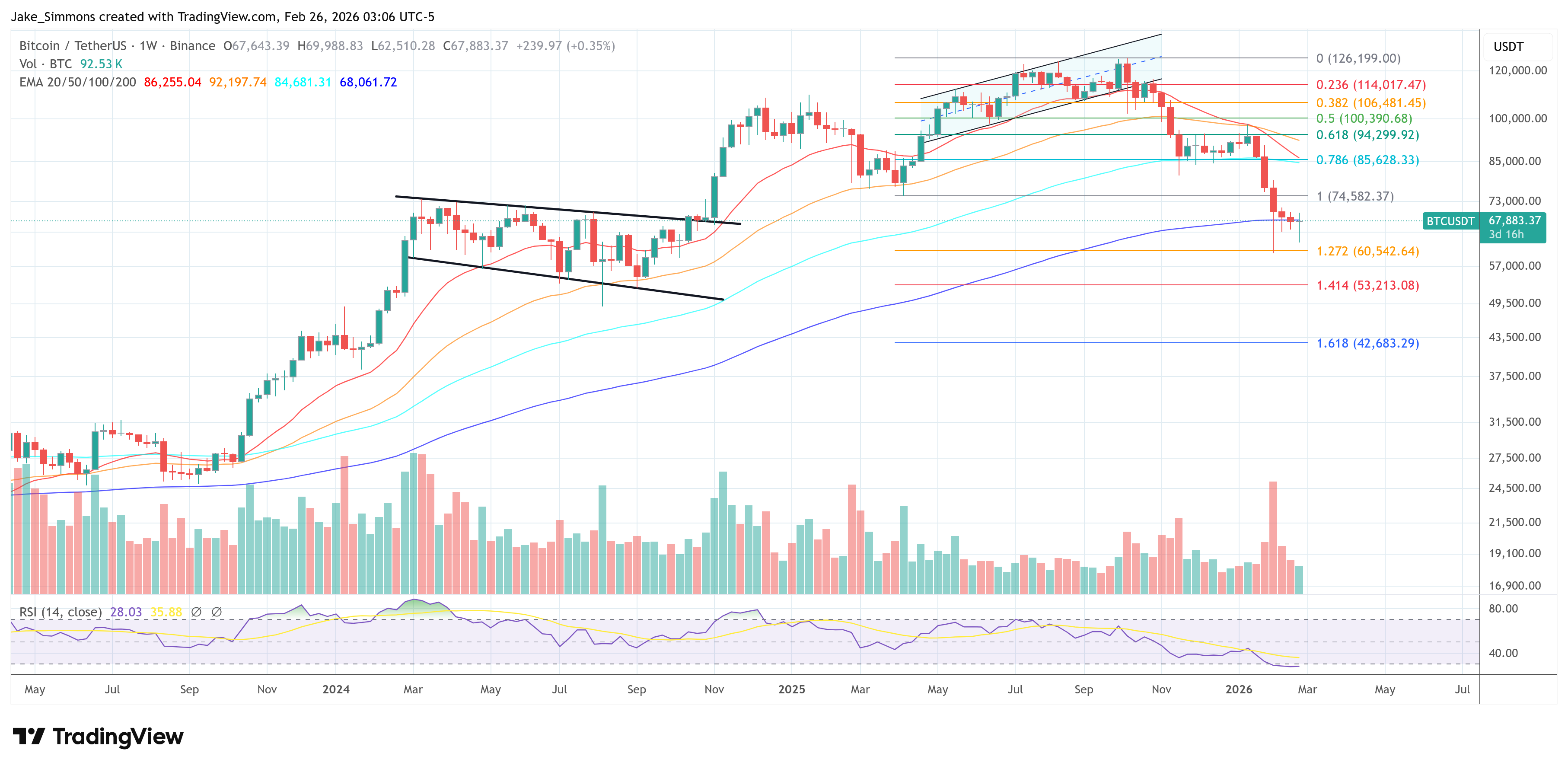
At press time, Bitcoin traded at $67,883. Make of that what you will.
Read More
- Brent Oil Forecast
- GBP EUR PREDICTION
- USD ARS PREDICTION
- GBP JPY PREDICTION
- USD JPY PREDICTION
- CNY JPY PREDICTION
- Hong Kong Freezes Stablecoin Rollout, Leaving HSBC, Standard Chartered Waiting
- XRP’s Desperate Dance with Bitcoin: A Tragicomedy in Three Acts
- Silver Rate Forecast
- Gold Rate Forecast
2026-02-26 17:10