
People are getting increasingly creative – and a little far-fetched – in their attempts to explain why bitcoin will succeed. A recent post on X claimed bitcoin will replace gold, citing plans to build lunar data centers that would somehow allow us to mine asteroids for gold. It’s a pretty wild idea!
Whether or not the recent comments were meant as sarcasm, if experts continue to talk about bitcoin this way, Jamie Dimon’s comparison to a fleeting trend like “pet rocks” could end up being right. However, it’s ironic that Dimon might actually be strengthening bitcoin’s long-term position by bringing it into mainstream finance. Bitcoin isn’t simply a digital version of gold; it’s an asset that can be used as security for financial transactions. The real question now is how much of the world’s financial system will ultimately rely on it as collateral.
Bitcoin is rapidly gaining acceptance on Wall Street. JPMorgan now lets clients use bitcoin-related assets—and possibly bitcoin directly—as loan collateral. Other major firms like Morgan Stanley and BlackRock are also starting to include bitcoin in their lending practices, investment products, and margin systems. Plus, with the launch of more affordable ETFs and retail accounts – such as the recent one from Charles Schwab – bitcoin is becoming more accessible to everyday investors. We can expect other financial institutions to join this trend soon.
Bitcoin’s purpose is shifting. Over the last ten years, people have described it in many ways – as a protection against inflation, a way to measure global money flow, a digital version of gold, a safe place for investments during political instability, and, more recently, as a key part of how institutions are investing. While each of these ideas seemed plausible at different times, none of them fully explain what’s happening with bitcoin right now.
Unlike previous market downturns where Bitcoin often acted as a safe haven, it’s now behaving more like an asset used as security for loans. This is actually worsening liquidity problems as people are forced to sell Bitcoin to cover their debts. Surprisingly, increased interest from institutions isn’t calming the market; it may be making price swings even more dramatic.
This transition offers a compelling explanation for bitcoin’s sad price action as of late.
When something is used as collateral, its price starts to behave differently. It’s no longer just an asset being held – it’s being used as a loan, potentially re-borrowed, and crucially, can be sold off if the loan isn’t maintained. This creates a repeating cycle that’s common in traditional finance, but often overlooked with Bitcoin. If prices drop, the value of the collateral decreases. This triggers margin calls, forcing sales to cover the loan. These sales then push prices even lower, creating a self-reinforcing downward spiral.
This is typical behavior for markets involving assets like stocks, property, and raw materials. Bitcoin is now starting to follow the same pattern.
Bitcoin’s true story is that it’s becoming the first asset traded worldwide that’s neutral, programmable, and can be used as collateral. It acts as an early warning signal – a long-term asset that doesn’t generate immediate income and is highly affected by how easily money is available.
Essentially, this suggests bitcoin acts like a highly sensitive gauge of how willing investors are to take risks. It tends to surge when there’s plenty of money flowing into the market, but it’s often the first asset to fall when money becomes scarce – even if the change is small. Recently, bitcoin has often dropped *before* the stock market during downturns, signaling potential problems rather than shielding investors from them.
Bitcoin has fallen sharply in value over the last five months, despite economic conditions that usually benefit it. Inflation is still high, the amount of money available globally has become more stable and is even increasing, global conflicts continue, and until recently, traditional investments like stocks and gold were doing well. If Bitcoin was truly influenced by these factors, we would have expected it to perform better. However, it hasn’t.
Recently, when stock prices dropped, some people noted that bitcoin’s price hadn’t fallen as much, suggesting it could protect against market losses. However, bitcoin has actually lost half its value in the last five months, proving it doesn’t offer any real protection – it simply fell *before* the broader market decline.
Other common explanations for bitcoin’s price movements also fall short. For example, the idea that bitcoin’s price follows the growth of the global money supply (M2) doesn’t hold up consistently. While they sometimes moved in the same direction, this connection has been unreliable, quickly changing from a strong positive correlation to a strong negative one during the same market period.
Bitcoin’s relationship to traditional investments like gold and stocks is inconsistent. While short-term connections can appear, long-term data shows little to no correlation between bitcoin and these assets. Recently, this instability has become even clearer. At times, bitcoin has moved in almost the opposite direction of gold, and its connection to stocks has fluctuated wildly – from virtually unrelated to strongly linked when large institutions are actively investing in riskier assets.
The idea of bitcoin being ‘digital gold’ hasn’t really played out in reality. When economic times have been uncertain lately, gold has actually performed much better than bitcoin, which has often seen significant drops in value similar to stocks. And despite being touted as a protection against inflation, bitcoin hasn’t consistently provided positive returns since inflation started rising in 2021.
The unfortunate reality is that bitcoin doesn’t consistently increase in value alongside stocks or any other typical investment. It doesn’t move with gold, and it doesn’t protect against inflation. Instead, it consistently drops in value faster and sooner when the financial markets become unstable.
Essentially, Bitcoin is a globally traded asset with a lot of price swings. It amplifies the normal ups and downs of the market, rather than shielding you from them. It’s more about taking advantage of market movements than providing a safe haven.
While asteroid mining and moon-based technology capture the imagination, for Bitcoin to truly become part of mainstream finance, we need to see it as it is today, rather than hoping for what it might become.
The opinions shared in this article are solely those of the author and don’t represent the views of CoinDesk or its related companies.
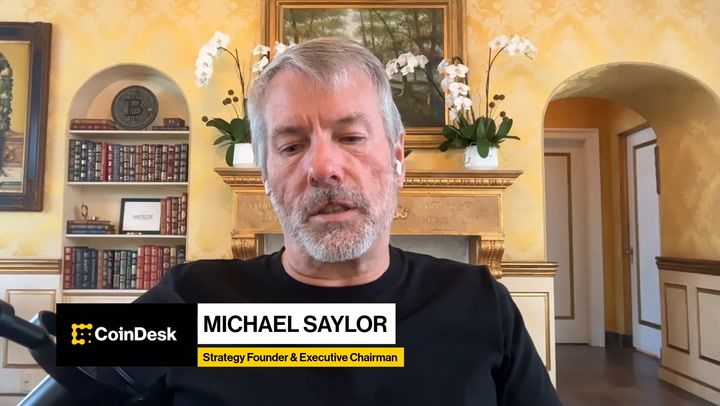
Canadian pension giant AIMCo buys the dip in Strategy, now sitting on $69 million unrealized gain
5 minutes ago

Tether posts $1.04 billion Q1 profit, reaches $8.23 billion reserve buffer
1 hour ago

AI agent forms its own company, gets ready to trade crypto
2 hours ago

Bitcoin takes another aim at $80,000 as stocks rise, oil drops on Iran optimism
2 hours ago

Institutional demand to drive bitcoin market cap to $16 trillion by 2030: Ark Invest
4 hours ago
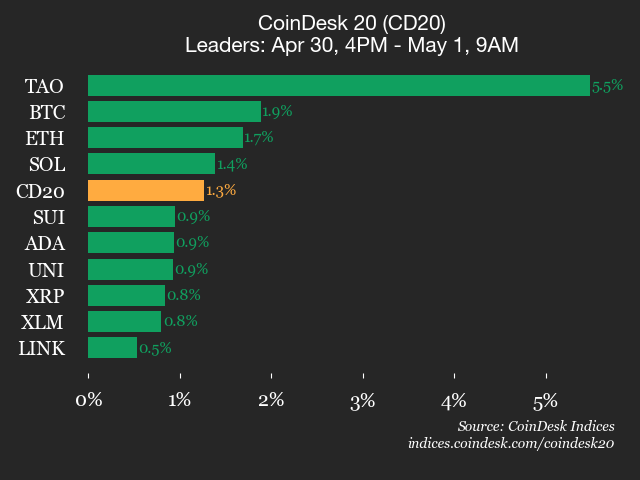
CoinDesk 20 performance update: Bittensor (TAO) gains 5.5%, leading index higher
4 hours ago

SBI Holdings eyes stake in crypto exchange Bitbank to build digital asset powerhouse
6 hours ago
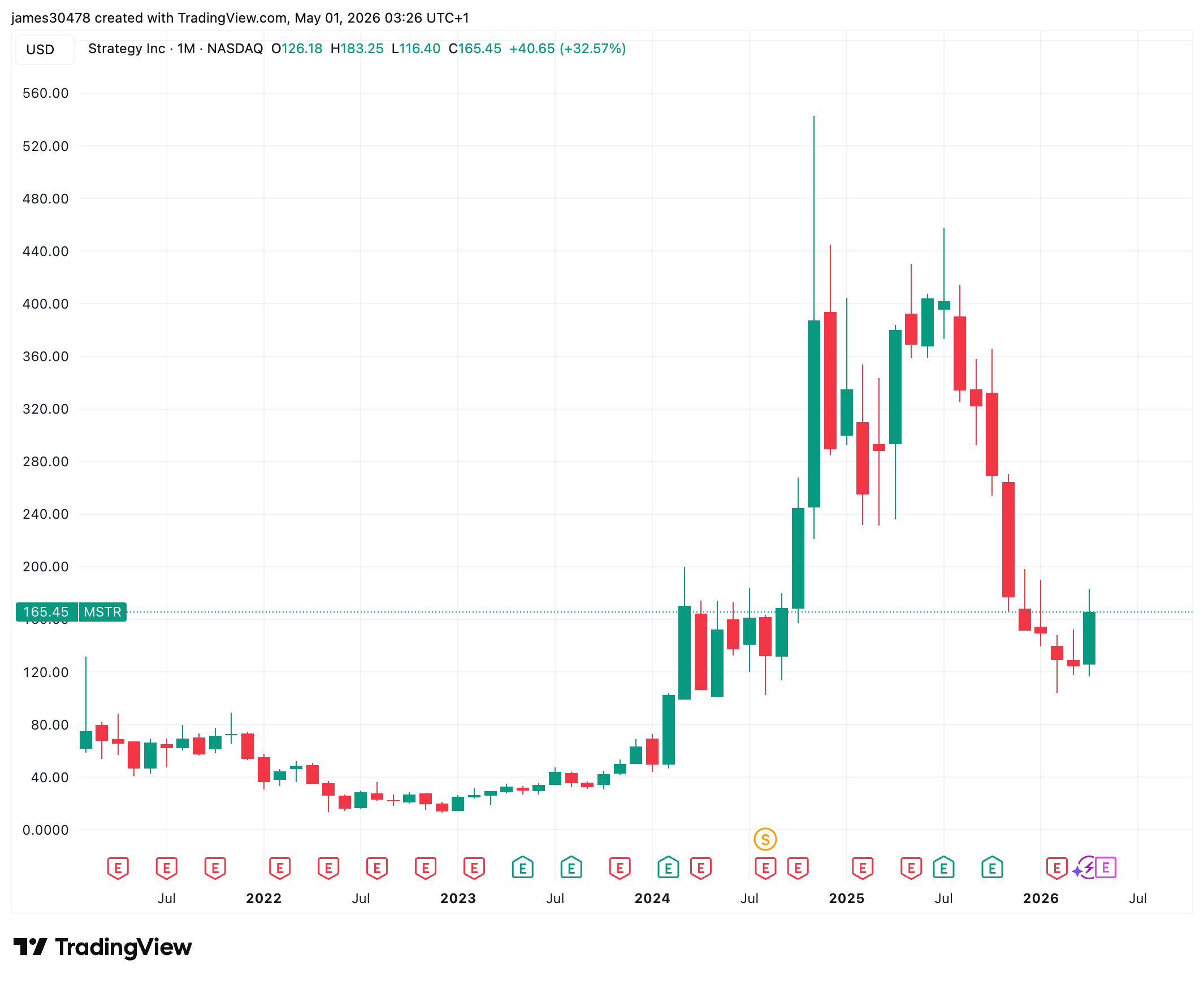
Strategy keeps STRC dividend at 11.5% as stock logs first monthly gain in nine
10 hours ago

Bithumb scores a legal win in South Korea as six-month suspension is lifted by local judge
10 hours ago
Bitcoin bounces as big tech earnings fuel optimism; short-term pressures remain
6 hours ago
U.S. senators won’t be weighing in on prediction markets bets after banning themselves
19 hours ago
Read More
- Brent Oil Forecast
- Silver Rate Forecast
- Gold Rate Forecast
- EUR AUD PREDICTION
- USD PHP PREDICTION
- ETH PREDICTION. ETH cryptocurrency
- Ethereum’s Magical Journey to $4,000: A Tale of Whales, Wizards, and ETFs 🧙♂️💰
- OpenSea’s CTO Dishes on the Future Beyond NFTs: A Dash of DeFi and a Pinch of AI 🌟
- Israel’s Markets Soar Amid War – What’s the Secret?
- Morgan Stanley’s Bitcoin ETF: Wall Street’s New Gamble
2026-05-01 20:41