In the grand theater of capitalism, where numbers dance like marionettes on the strings of greed, SpaceX has ascended to the heavens, its IPO a spectacle of unprecedented avarice. On this day, the world witnessed the coronation of Elon Musk, not as a mere mortal, but as the first trillionaire, a title as absurd as it is inevitable.
-
Key Takeaways:
- SpaceX, in a display of financial hubris, raised $75 billion in the largest initial public offering (IPO) ever recorded, opening SPCX at $150 on June 12, 2026.
- Elon Musk, the modern-day tsar of technology, saw his net worth surge past $1.1 trillion, a figure so vast it mocks the struggles of the proletariat.
- Starlink, the golden child of SpaceX, generated $1.19 billion in Q1 operating profit, while the AI division, a bottomless pit of ambition, burned through $2.47 billion in the same period.
A Record Raise, A Record Wealth
On the eve of this financial orgy, SpaceX priced 555.56 million shares at $135 apiece, amassing $75 billion-a sum that dwarfs even the riches of Saudi Aramco’s 2019 offering. When the stock debuted at $150 on Nasdaq under the ticker SPCX, Musk’s fortune swelled like a bloated oligarch’s ego. By midday, his stake had added $188 billion, propelling him into the stratosphere of wealth, where the air is thin and the morality thinner.
Forbes, ever the chronicler of excess, pegged his net worth at $1.1 trillion, a number that screams of both triumph and tragedy. Bloomberg, not to be outdone, concurred. Thus, Musk became the world’s first verified trillionaire, a title that will surely echo in the annals of history as both a marvel and a cautionary tale.
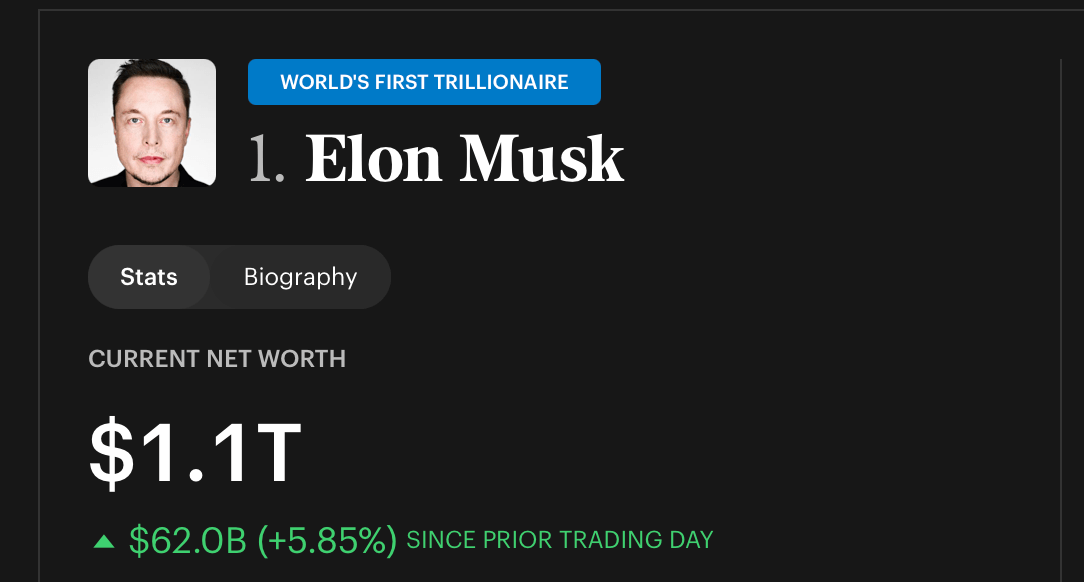
His 38% stake in SpaceX, amounting to 6.4 billion shares, is the cornerstone of his empire. Tesla, Neuralink, xAI, and The Boring Company-each a testament to his boundless ambition-complete the mosaic of his holdings. Yet, it was SpaceX’s meteoric rise that sealed his place in the pantheon of the obscenely rich.
How the Stock Traded
SPCX opened at $150 and soared like a rocket fueled by the dreams and delusions of investors. Within 30 minutes, it climbed to $165, reaching an intraday high of $176.45-a 30.7% surge from the IPO price. Volume hit 475.8 million shares, a testament to the frenzy of both institutions and retail traders, each hoping to sip from the fountain of Musk’s fortune.
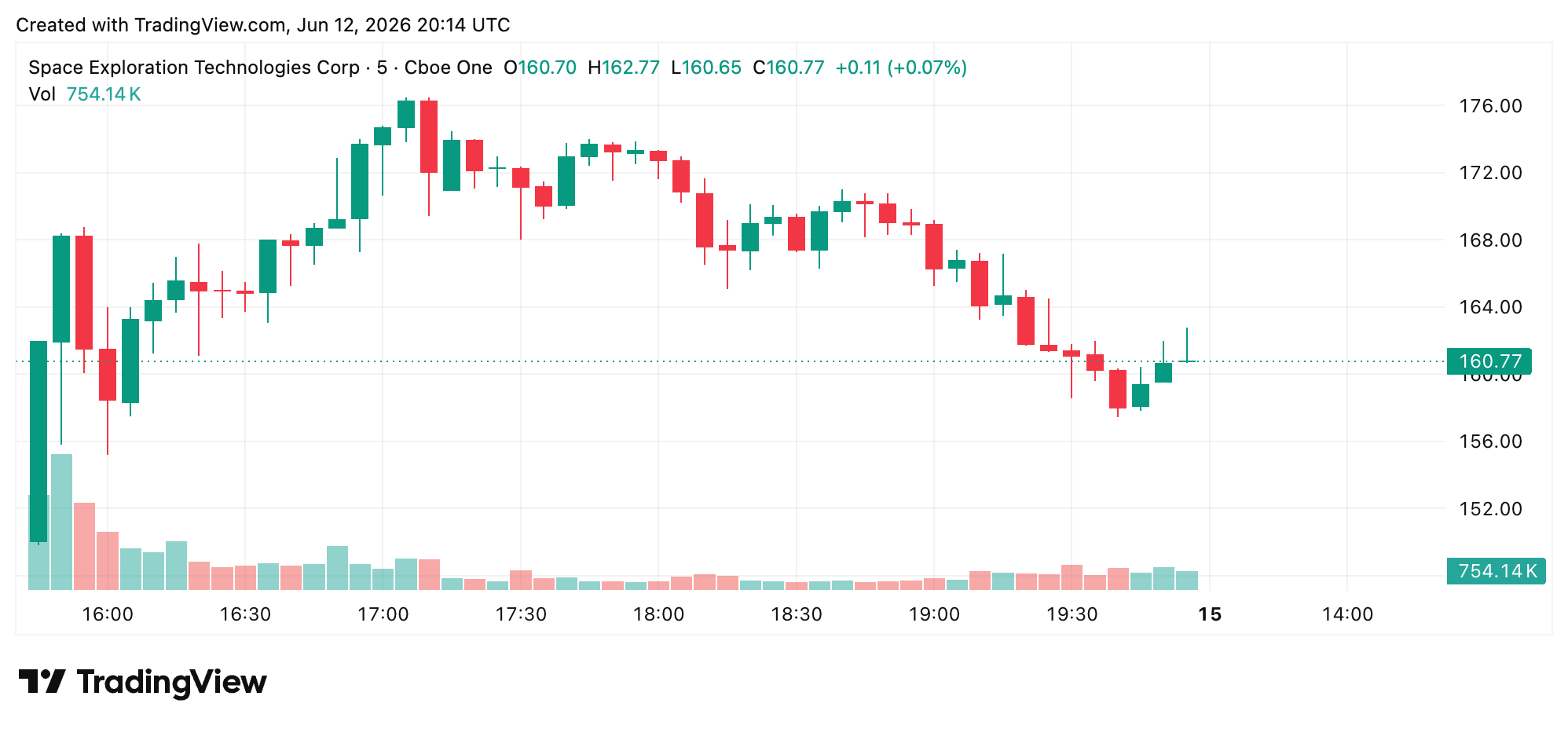
By 3:45 p.m. ET, the stock had cooled to $159, still a 17.8% gain. The retreat from the peak was as predictable as the ebb and flow of human folly. Profit-taking and the influx of new shares tempered the initial euphoria, a reminder that even in the realm of trillion-dollar valuations, gravity exerts its pull.
Retail investors, those ever-hopeful souls, were allocated 22.5% of the offering-an unusually generous slice for such a colossal IPO.
What the Financials Actually Show
Beneath the glittering facade of SpaceX’s success lies a more nuanced reality. The company reported $18.7 billion in full-year revenue but suffered a $4.9 billion net loss. In Q1 alone, it logged a $1.94 billion operating loss on $4.69 billion in revenue. Starlink, the lone profitable division, generated $1.19 billion in operating profit, while the AI unit hemorrhaged $2.47 billion, a testament to Musk’s relentless pursuit of the future, regardless of cost.
The AI division, a black hole of capital, produced $818 million in revenue but accounted for 76% of the company’s $10.1 billion in Q1 capital spending. Investors, it seems, are not buying into a story of current profitability but rather a vision of future dominance-a bet as bold as it is risky.
What It Means for Markets
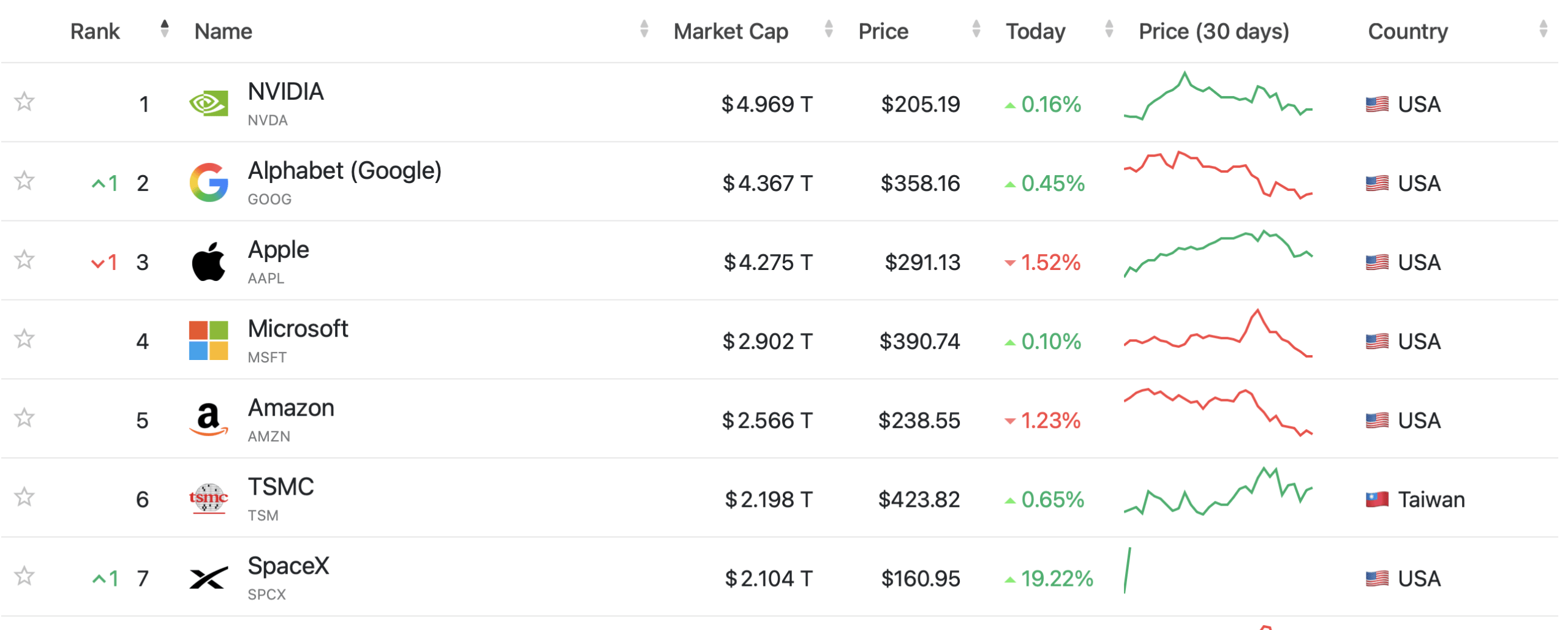
JPMorgan’s data reveals that hedge funds trimmed their exposure to major U.S. tech stocks ahead of the IPO, freeing up capital for SPCX. This rotation transformed the debut into a broader market liquidity event, not merely a SpaceX milestone. With a single trading session, SpaceX joined the ranks of the most valuable public companies in the United States, its valuation resting on Starlink’s recurring revenue, reusable rocket dominance, and grandiose plans for Mars and space-based infrastructure.
What Comes Next
Friday’s coronation was but the beginning. The true test lies ahead: can Starlink’s profits and SpaceX’s launch leadership grow fast enough to justify a $2 trillion-plus valuation, while the AI division continues to devour capital at a pace that would strain even the most robust balance sheets? Musk’s net worth, now a 13-digit figure, will rise and fall with the stock-a paper empire built on the whims of the market. The next earnings report will offer the first glimpse into whether this grand experiment is on the right trajectory or destined for the annals of hubris.
Read More
- USD PHP PREDICTION
- USD CNY PREDICTION
- Gold Rate Forecast
- Brent Oil Forecast
- USD MXN PREDICTION
- EUR CNY PREDICTION
- GBP CNY PREDICTION
- CNY JPY PREDICTION
- Senate’s CLARITY Act: A July 4th Fireworks Display or Political Fire Sale?
- EUR USD PREDICTION
2026-06-12 23:57