In the shadow of desert winds and the cold calculus of modern finance, a newly forged coin emerges-not bound by the chains of usury, but tethered to the sands of tradition. PUSD, a dollar-linked artifact, now dances on a blockchain built in the Middle East, where Abu Dhabi’s financial titans whisper secrets to a settlement platform. One might call it progress; others, a desperate bid to reconcile the unshakable with the algorithmic.
The Currency of Compromise
This stablecoin, birthed by Palm Azgar Finance, hoards not dollars but riyals and dirhams-tokens of the Gulf’s own, yet shackled to the greenback’s ghost. A clever trick, perhaps, to satisfy the whims of Shariah’s austere gaze, which frowns upon interest and demands assets as tangible as a Bedouin’s camel. Yet, one wonders: does this alchemy truly purify the ledger, or merely dress old sins in new robes?
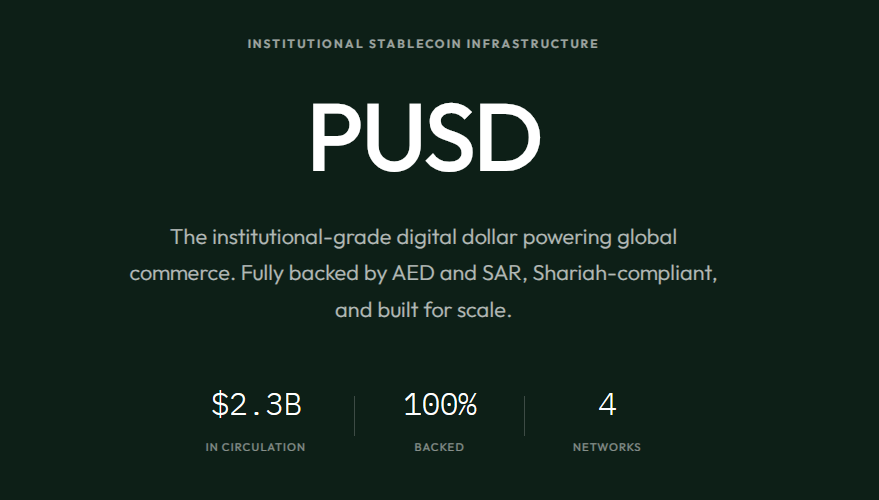
With $2.3 billion swirling in its digital coffers, PUSD pirouettes across Ethereum, BNB Chain, Solana, and Tron-blockchain’s most crowded dance floors-before landing on ADI Chain, a settlement layer crafted by Abu Dhabi’s financial elite. The UAE’s Central Bank, ever the gatekeeper, has blessed this latest endeavor, though one suspects their approval was less about morality and more about the promise of transaction fees.
Now, institutions may settle in either dollar-linked tokens or dirham-denominated ones, a dual identity that feels less like innovation and more like a bureaucratic tango. The ADI Foundation, with its grandiose vision of payment corridors spanning the Gulf, the Middle East, and parts of Africa, seems to believe it’s building a bridge to utopia. Or perhaps it’s just another toll road, this time paved with hash functions.
The $3 Trillion Mirage
Islamic finance, that vast desert of $3 trillion, has long been a no-man’s-land for crypto. Conventional banks, with their Shariah-certified paperweights, have held sway. Now, blockchain’s scribes attempt to etch their names into the sands, but the rules remain unyielding: no interest, no speculation, only assets as real as the ground beneath one’s feet. A stablecoin must prove its reserves, its purity, and its refusal to dabble in the forbidden arts of yield farming. A tall order, indeed.
Sharia Law, that ancient parchment of moral rigor, demands verification from scholars who have not yet blessed this creation with their divine nod. One imagines them hunched over scrolls, squinting at smart contracts as if they were the Quran itself. Meanwhile, PUSD’s architects, with their ADI Chain and Gulf-backed ambition, hope to convince the world that compliance is not a virtue but a marketable commodity.

The UAE, that unlikely oasis of crypto regulation, has become a battleground for global giants. Tether, Ripple USD, and Circle now jostle for space in the ADGM’s financial bazaar, where permits are handed out like dates at a desert caravan. PUSD, the newcomer, must now contend not only with these titans but with the existential question: in a world where every token is a promise, who truly holds the reins?
The Central Bank and Abu Dhabi’s Global Market have drawn lines in the sand, demarcating zones of permission and peril. Yet, as the sun sets on this financial frontier, one cannot help but chuckle at the irony: a stablecoin, designed to anchor chaos, now floats on the tides of bureaucracy, its compliance as fragile as a mirage in the desert.
Read More
- Brent Oil Forecast
- Silver Rate Forecast
- Gold Rate Forecast
- Szabo’s Bitcoin Warning: Don’t Mess It Up!
- Why Bitcoin is the New Water Cooler Topic: Decline, Drama, and Structural Weakness!
- 🤑 Bitcoin, Bills, and Bold Moves: Lummis’s Crypto Revolution! 🌟
- Solana Co-Founder Calls North Korean Hack ‘Terrifying’ – Here’s How They Did It
- USD PHP PREDICTION
- ATOM PREDICTION. ATOM cryptocurrency
- Corporate Bitcoin Frenzy Looms: Scaramucci Predicts Inevitable Adoption
2026-04-24 03:59