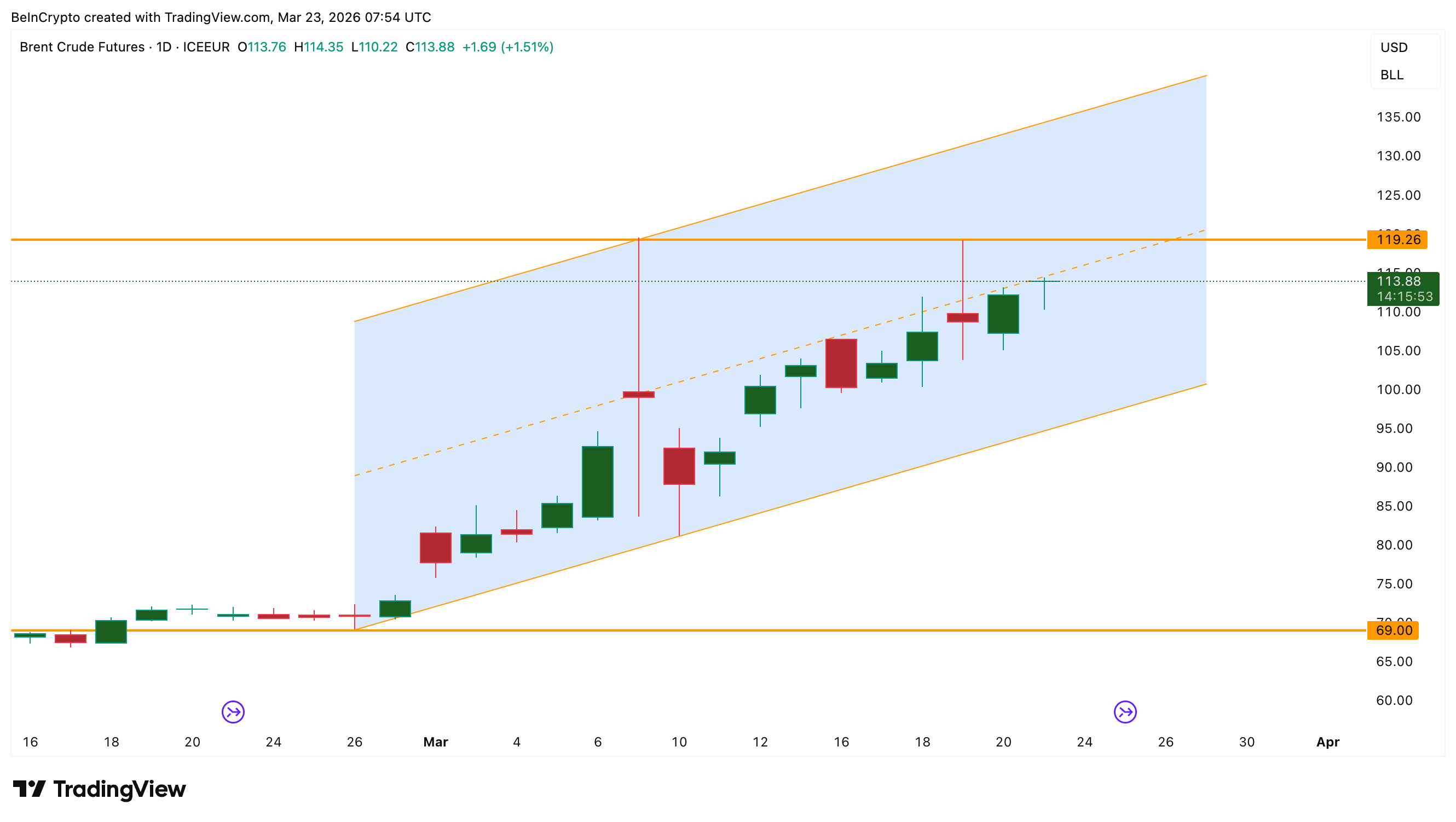
Brent crude oil prices are currently around $113, having jumped over 46% this year. This increase is largely due to disruptions in shipping through the Strait of Hormuz caused by the conflict involving Iran. However, the number of outstanding contracts for Brent crude has fallen by about 50% since late February, which makes some question who is driving up the price. West Texas Intermediate (WTI) crude oil also briefly rose above $100, showing that the increased price due to the conflict is now affecting both international and US oil benchmarks.
The US Dollar Index (DXY) is currently around 99.84, influenced by oil prices and increasing interest rates which are drawing investors to dollar-based investments. The yield on 10-year Treasury bonds has risen by about 0.45% since the start of the war on February 28th, reaching 4.40%. This pressure in the bond market is becoming increasingly significant.
Open Interest Drops as Prices Climb
There’s a notable difference between the rising price of Brent crude oil and the activity in the futures market. Since late January, the price has jumped from about $65 to $113 a barrel. However, the number of open contracts – representing future trading activity – has nearly halved, falling from around 770,000 in late February to just 380,000. This represents a decrease of almost 50%.
In futures trading, when prices go up but fewer contracts are being traded, it’s often a sign that the price increase isn’t sustainable. This usually happens when traders who were betting on prices falling are forced to buy to cover their losses, rather than new investors driving the price up. These ‘short squeezes’ can cause prices to jump significantly, but they typically run out of steam once those initial traders have finished covering their positions.
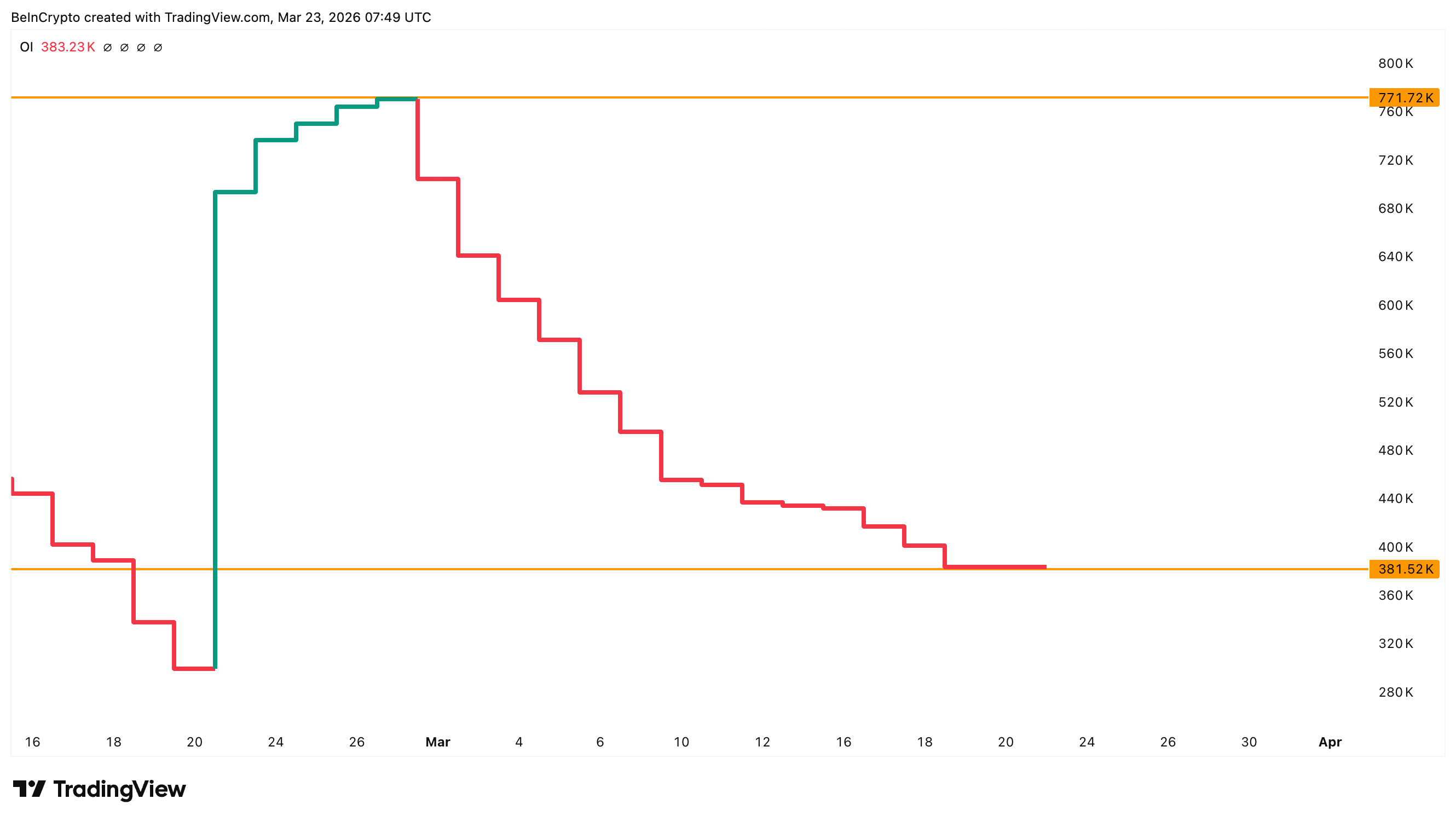
Closing the Strait of Hormuz would severely disrupt oil supplies, causing prices to jump independently of typical market forces. However, the recent price increase isn’t as strong as it appears from simply looking at the charts. The next piece of data will show whether this upward trend is sustainable or likely to weaken.
A Proprietary Index Shows the Trend Is Still Healthy
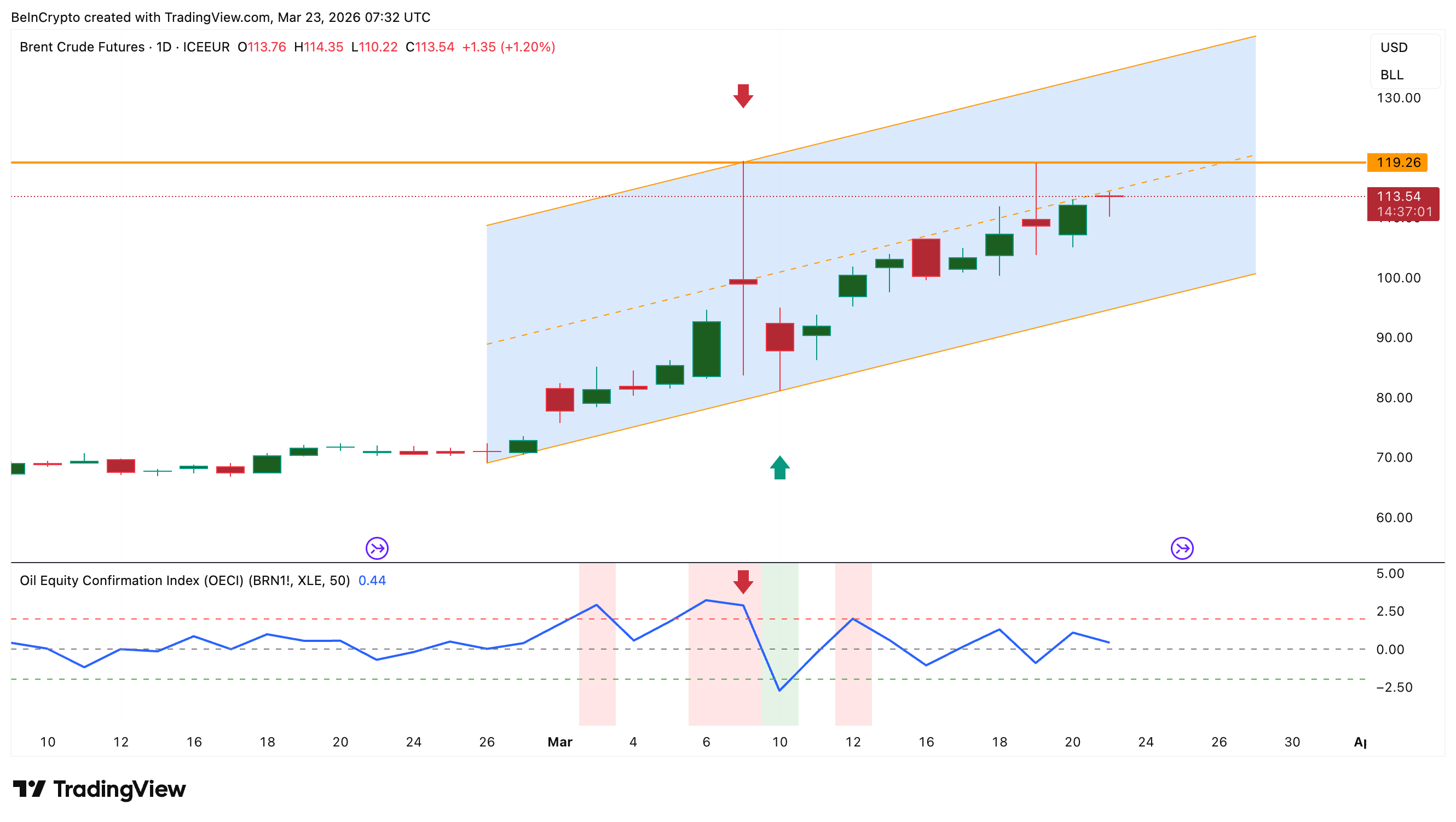
BeInCrypto’s Oil Equity Confirmation Index (OECI) helps gauge how strong the current trend in oil prices is. This index compares the performance of Brent crude oil to oil company stocks (XLE). A reading above +2 suggests oil prices are rising faster than stocks, often due to short-term fear. A reading near zero indicates a healthy, synchronized trend. Below -2, stocks are performing better than oil, suggesting investors anticipate future price increases.
The Oil Exploration and Capital Investment (OECI) index is currently at 0.44, which indicates that oil prices are at a healthy level. Earlier this month, when the index reached 3.23 and 2.89, the price of Brent crude oil briefly peaked near $119 before falling back. On the other hand, when the OECI dropped to around -2.75, prices rebounded. The current OECI reading suggests that oil prices could continue to rise without becoming excessively inflated.
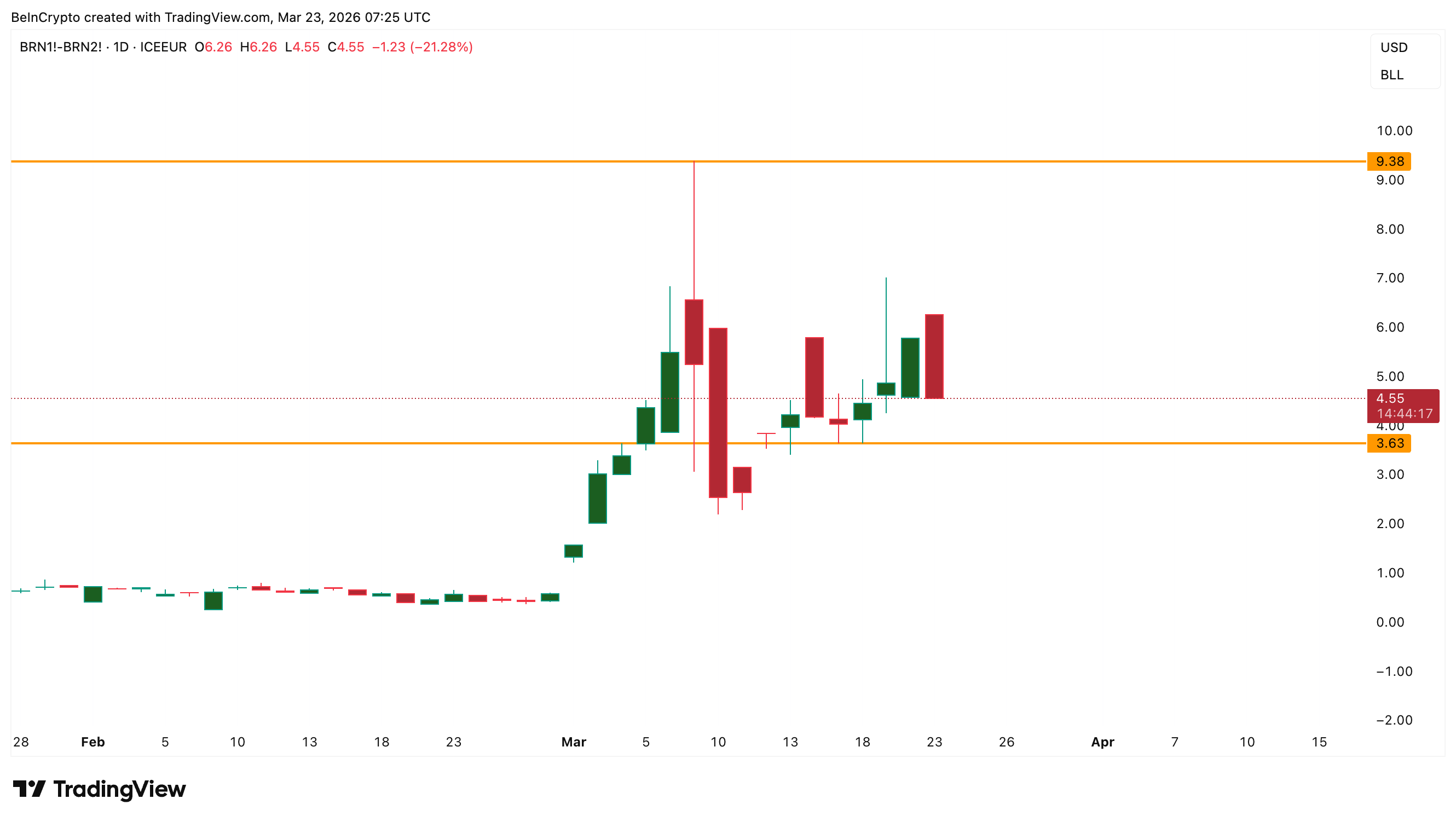
The difference in price between Brent oil contracts for immediate and next-month delivery is currently $4.55, which indicates buyers are willing to pay more for oil right away. This suggests that demand for physical oil remains strong, even though prices have recently dropped.
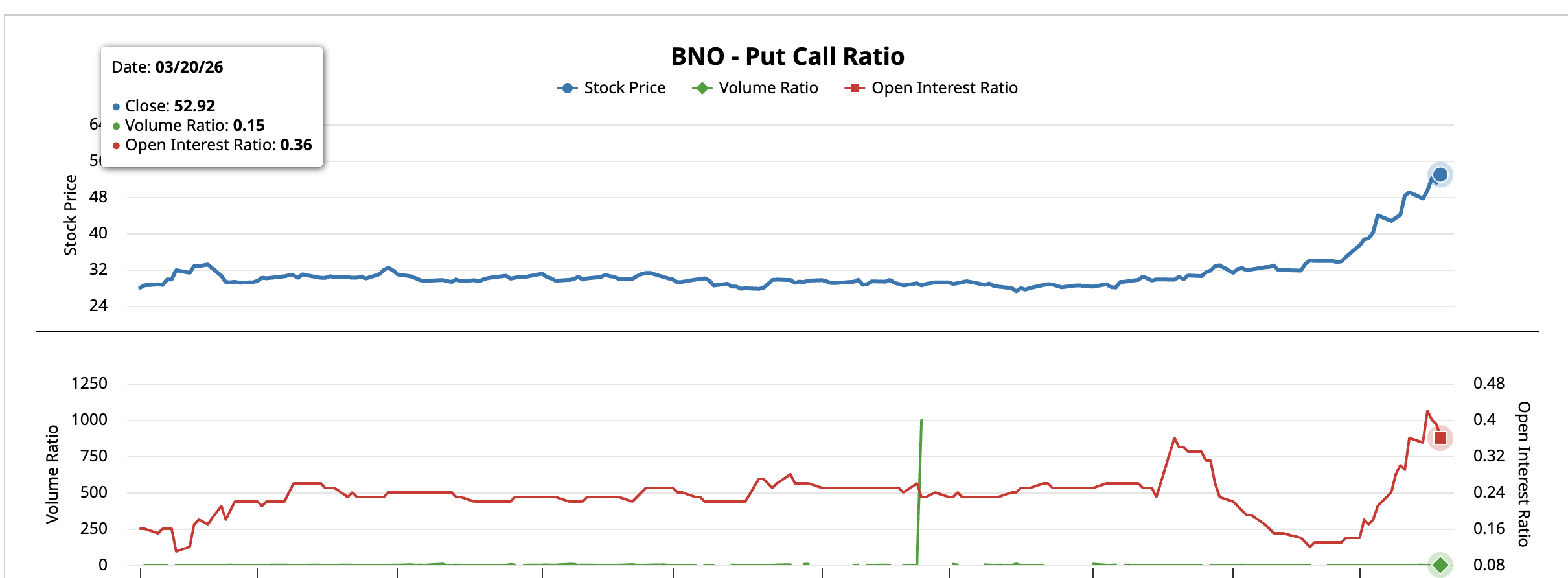
Looking at options trading for the BNO ETF, which tracks Brent oil prices, suggests traders are betting oil prices will continue to rise. As of March 20th, the ratio of put options to call options was 0.15 by volume and 0.36 by open interest, indicating traders are more focused on profiting from price increases than protecting against a potential drop.
As an analyst, I’m seeing a significant risk to oil prices that isn’t directly related to supply and demand – it’s the macroeconomic environment. Right now, the 10-year Treasury yield is the biggest factor. At 4.40% and continuing to rise, it’s nearing a level – between 4.50% and 4.60% – that previously led to a slowdown in tariff increases back in April 2025. This yield level could really put a damper on things.
As an analyst, I’m observing a really unusual situation unfolding in the precious metals market. In just three hours, gold and silver together have lost a combined $2 trillion in market value. It’s particularly strange when you consider that oil prices have given up their earlier gains today, yet US stock market futures are almost positive. This all started happening since the escalation of tensions surrounding the Iran conflict, and it’s a development I’m watching very closely.
— The Kobeissi Letter (@KobeissiLetter) March 23, 2026
If interest rates keep rising, it could put a limit on how high oil prices can go, as it impacts investments and forces governments to make certain choices.
Brent Oil Price Faces a Range-Bound Scenario
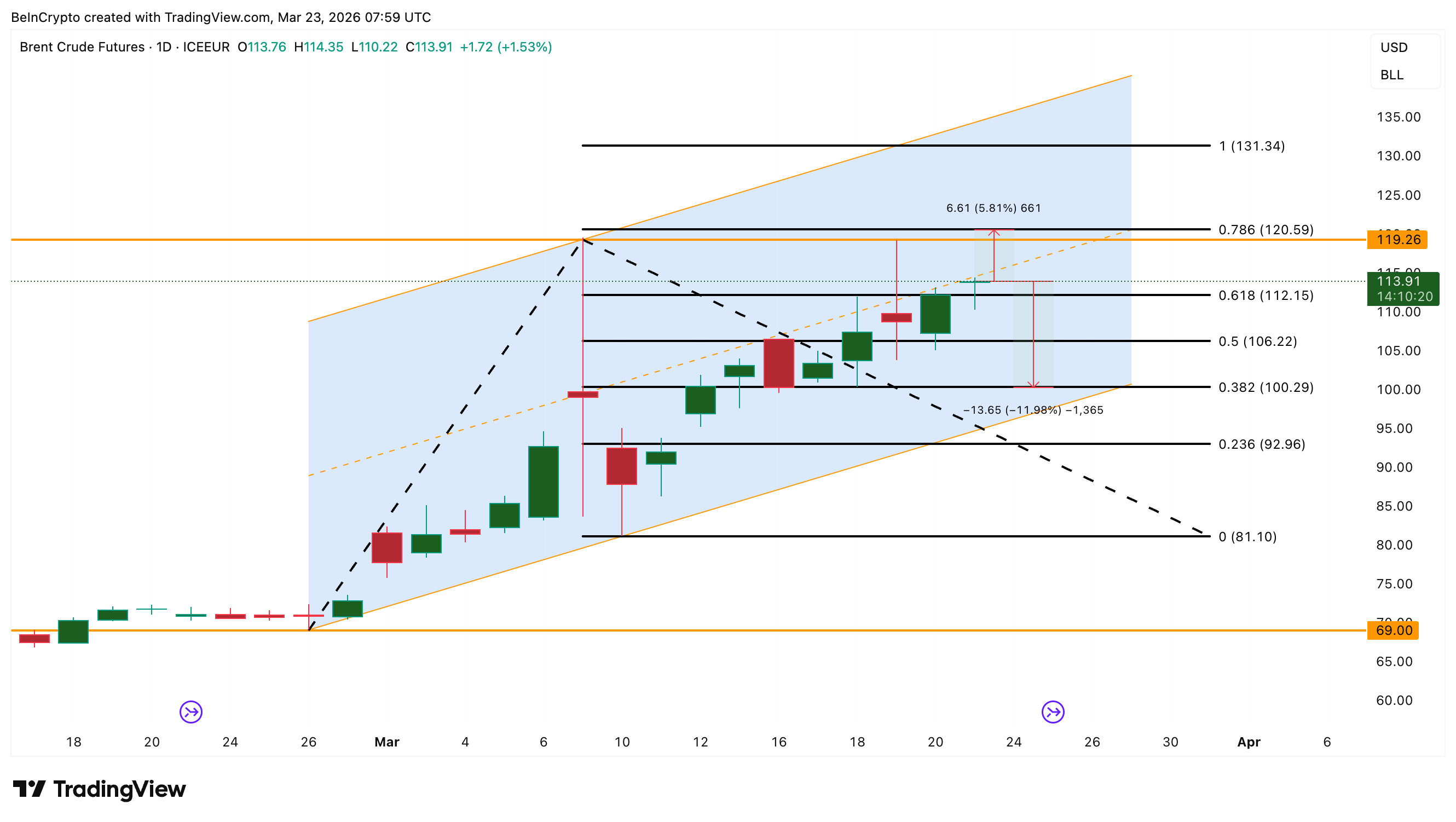
Brent oil has been trading within a steady upward trend since early February. It has twice hit resistance around $119 to $120 (on March 9th and 19th), meaning it hasn’t been able to break through that level. If it *does* manage to rise above $120, it could potentially reach $131, but this would likely depend on increased tensions in the Strait of Hormuz and some relief from pressure in the bond market.
Considering the positive OECI data, continued backwardation in the market, and optimistic options activity, the most likely outcome is that prices will stay within a range of $106 to $120. If the price falls below $106, it could then move towards $100.
As a researcher, I’m seeing several indicators that currently support continued gains in oil prices: the OECI is at 0.44, we’re observing backwardation above $3.63, and the put-call ratio is below 0.36. However, I’m also noticing some concerning signals. Open interest has dropped significantly, and the 10-year Treasury yield is nearing a level that could signal trouble. This suggests the recent price increase might not be as strong as it appears, and fewer investors are actually participating in this rally.
The price of $106 is a key level to watch. If it holds, the price is likely to continue rising within a positive trend. However, if it falls below $106, it could drop to $100 or even $92.
Read More
- ETH PREDICTION. ETH cryptocurrency
- Maxim Gorky’s Take on the $5T Stablecoin Tsunami and the $BEST Token
- Gold Rate Forecast
- Record Hashpower Collapse Ignites Miner Crunch
- EUR VND PREDICTION
- BTC PREDICTION. BTC cryptocurrency
- BREAKING: Tiny Shiba Doge Discovers Secret Trampoline at Vanishing 0.000010 Floor-Moon Any Second 🚀🐶
- Why Best Wallet Token is Your New Favorite Crypto Wallet – Young, Hip, and Ready to Disrupt!
- Filecoin’s EVM Upgrade: From Storage to Financial Superhero
- Silver Rate Forecast
2026-03-23 15:12